


How to Use Step Up For Students for Speech/Language Therapy in Palm Beach and Martin Counties
Can you use Step Up For Students for speech-language therapy? Learn how the Unique Abilities Scholarship works, what an SLP can address for children with dyslexia, dysgraphia, or ADHD, and how to find Coastal Orofacial Wellness in EMA. The guide also explains how full-time public school enrollment affects funding.

How to Use Step Up For Students for Speech Therapy in Palm Beach and Martin Counties
Your child has a Step Up For Students scholarship, and you’re looking for speech therapy. But where do you find a provider? And what do you click in EMA once you find one?
If your child has funding through the Family Empowerment Scholarship for Students with Unique Abilities (FES-UA), you may be able to use available scholarship funds for eligible speech-language services. I’m Marianne Salem, a speech-language pathologist and the owner of Coastal Orofacial Wellness. I offer in-home visits in Palm Beach and Martin counties, including Jupiter, Tequesta, Hobe Sound, Stuart, and Palm Beach Gardens. Virtual visits are also available when they’re a good fit for your child.
What would you like to get easier for your child?
Maybe your child has a lot to say, but people outside your family have trouble understanding them. Maybe they get frustrated when they have to repeat themselves. Or maybe you’re wondering whether it’s time for a speech-language evaluation. An everyday example like one of these is enough to start the conversation.
I also work with families who have questions about tongue resting posture or swallowing patterns. If you’re looking specifically for orofacial myofunctional therapy, ask me about the service you’re considering so we can check whether it’s available through EMA before you reserve funds.
Can speech-language therapy help with dyslexia, dysgraphia, or ADHD?
An SLP can help with spoken and written language. What we work on depends on the skills your child is having trouble with.
Dyslexia. Your child may know the sounds for individual letters but have trouble blending them to read a word. Therapy can target skills such as hearing and manipulating sounds in words, decoding, and spelling.
Dysgraphia. Your child may be able to tell you an idea out loud but struggle to get it onto the page. An SLP can address the language involved in writing, including spelling, building sentences, and organizing ideas. If letter formation or other handwriting mechanics are the main concern, an occupational therapy evaluation may be a better fit.
ADHD. If an evaluation identifies a co-occurring language difficulty, an SLP can work on that skill. For example, a child might need help understanding spoken information or retelling a story in order.
ASHA’s guide to written language disorders explains the connection between spoken language, reading, and writing.
What Step Up can pay for
Step Up lists services from approved speech-language pathologists as an eligible specialized expense under FES-UA. The family handbook lists dyslexia and dysgraphia under Specific Learning Disability and ADHD under Other Health Impairment. These diagnoses may support scholarship eligibility when the application and documentation requirements are met. If your child already has funding, confirm that the specific service is eligible before reserving funds. FES-UA Family Handbook
If your child attends public school full-time, Step Up cannot fund their FES-UA account while they remain enrolled full-time, even if EMA shows them as eligible. That means there are no FES-UA funds to use for private speech-language therapy during that enrollment. Step Up’s public school enrollment guidance
How to find Coastal Orofacial Wellness in EMA
Sign in to your Education Market Assistant (EMA) account.
Select Marketplace, then Find Providers.
Choose the child who will receive services.
Search for Coastal Orofacial Wellness. Click the practice name to see the available offerings.
Once we’ve confirmed which offering fits your child’s needs, choose that service and the quantity we discussed. Add it to your cart and select Reserve Funds.
For eligible services with enough available scholarship funds, EMA direct billing lets the practice bill the scholarship account for the reserved service. Step Up walks through each screen in its guide to finding a provider in EMA. You can also review the Unique Abilities scholarship spending guide.
Let’s start with a short phone call
Tell me what you’re noticing and what you’d like to get easier for your child. In a complimentary 15-minute phone conversation, we can talk about whether an evaluation or therapy makes sense, whether home or virtual visits would work for your family, and which service to look for in EMA. New to the scholarship? Read my overview of how Step Up For Students works and how I can help.
Schedule a complimentary 15-minute phone conversation by emailing marianne@coastalorofacialwellness.com.
Marianne Salem, CCC-SLP
Coastal Orofacial Wellness

A Little Grace in the Grocery Aisle: Every Child Belongs
Every outing has a story we cannot see. Discover how patience, kindness, and practical support can help children with disabilities and their families feel welcome.

A Little Grace in the Grocery Aisle: Helping Every Family Feel Welcome
You hear a child crying several aisles away.
As you turn the corner, you see a parent trying to comfort them. Perhaps the child is covering their ears, shouting, or sitting on the floor.
You have witnessed a few seconds of this family’s day.
What you haven’t seen is everything it took to get there.
Recently, I read a mother’s heartfelt account of taking her child with autism to the grocery store. She described the preparation, the planning, and the anxiety surrounding an outing many of us barely think about.
She had worked toward this experience with her child and sought guidance from his therapist. She had prepared carefully and brought items she hoped would help him feel comfortable.
Despite that preparation, the experience became overwhelming. While she helped her child through his distress, the reactions of people around them made an already difficult moment more painful.
Her story stayed with me.
As a speech-language pathologist, a mother, and a member of this community, I want us to consider what we can offer families in moments like these.
Our response can help a family feel welcome enough to try again.
There is a whole story we cannot see
An ordinary errand can involve unfamiliar sounds, bright lights, crowded spaces, unexpected waiting, and uncomfortable sensations.
A child may have difficulty communicating that something hurts, feels frightening, or has become too much. What we see on the outside may reveal very little about what that child is experiencing.
We cannot know a child’s needs simply by observing them in a checkout line. We also cannot measure a parent’s effort by how calmly an outing unfolds.
That parent may have spent days preparing. They may be following a plan developed with their child’s care team. They may already be deciding whether to take a break or go home.
They deserve room to make those decisions without strangers passing judgment.
And the child deserves patience, privacy, and dignity throughout that experience.
What follows a family home
One of the most moving parts of this mother’s account was her description of what she would carry home.
Even after her child was comfortable and calm, she would still feel the hurt of the comments and disapproving looks. She described feeling so discouraged that she questioned whether she could face another outing.
A passing comment may take seconds to make. The person who receives it may remember it long afterward.
When families anticipate judgment, everyday opportunities can begin to feel out of reach. A trip to the store, a birthday invitation, or a meal together becomes another decision about whether they have the energy to face other people’s reactions.
We should want families to feel that there is a place for them in our neighborhoods, businesses, places of worship, and community events.
That welcome needs to hold, even on a difficult day.
Children deserve opportunities to participate
Children discover their communities by being part of them: visiting a library, choosing a snack, exploring a playground, or attending a family celebration.
For children with autism and other disabilities, those experiences may require additional preparation, accommodations, and flexibility.
Manageable outings from a young age can offer opportunities to practice communication, explore interests, and become familiar with everyday places. Those opportunities remain valuable at any age.
Each experience should respect the individual child’s comfort, communication, and readiness. Simply increasing exposure does not guarantee that an outing will become easier.
Sometimes participation means a short visit during a quiet time. Sometimes it includes headphones, a familiar object, a communication device, or frequent breaks. Sometimes the best decision is to leave and try another day.
A brief outing can still be meaningful. Leaving early can be a thoughtful response to a child’s needs.
Children should not have to demonstrate perfect behavior to be welcomed into everyday life.
A lesson my mother-in-law taught me
Long before I became a speech-language pathologist, my mother-in-law taught me a lesson I still carry with me.
She raised five children and understood that parenting could look different from one child to the next. When she saw a parent struggling in public, she offered encouragement.
A warm expression. A few kind words. A moment of connection.
“You’re doing a great job.”
I remember watching parents’ shoulders relax. Sometimes they let out a breath, as though they had been bracing themselves for criticism and had received kindness instead.
She helped people feel seen and supported.
Her elegant, loving, and gracious spirit influenced the people around her, including me. When I responded to this mother’s post, I thought about her example and wanted to pass along some of that same encouragement.
We all have opportunities to carry that kindness forward.
What compassion can look like
Support does not have to be elaborate. Often, it means making a difficult moment a little easier.
Give the family space. Avoid gathering, staring, or adding more noise and attention.
Offer help gently. “Would any help be useful?” gives the parent a choice. Respect their answer, including a request for space.
Make practical room. Keep a walkway clear, allow extra time, or help with a door if welcomed.
Let the family guide the interaction. Ask before approaching closely or touching a child or their belongings.
Protect the child’s dignity. Put the phone away. A vulnerable moment should never become someone else’s entertainment.
Keep extending invitations. Ask what would make participation comfortable, and be understanding if plans change.
Offer encouragement without expecting conversation. A reassuring smile or a brief, kind comment may be all a parent has room to receive.
Families should not have to explain a diagnosis to receive patience.
Our children are learning from us, too
When children notice someone behaving or communicating differently, adults have an opportunity to model respect.
We can say:
“Some people experience sounds and busy places differently. We can give them space.”
Or:
“People communicate in different ways. We can be patient and kind.”
These conversations help children understand that differences are part of everyday life.
Sharing community spaces also gives adults opportunities to listen, learn, and become more comfortable with people whose experiences differ from their own. A child with a disability, however, has no responsibility to educate strangers or explain their needs publicly.
The responsibility to respond respectfully belongs to us.
Businesses, libraries, places of worship, and recreation programs can help by listening to families, explaining what visitors can expect, and considering quieter spaces or flexible participation options.
Here in Palm Beach and Martin counties, we can build that welcome through everyday choices: a patient interaction, an accessible activity, an understanding invitation, or a willingness to adjust.
To the parent wondering whether to try again
Your family deserves connection, joyful experiences, and a place in this community.
You are allowed to plan carefully. You are allowed to change the plan. You are allowed to leave early, take a break, or choose a different activity.
You and your child deserve support on the days that go smoothly AND the days that feel hard.
A difficult outing does not erase your effort, your love, or your child’s worth.
And to the rest of us: the next time we encounter a family having a hard moment, let’s remember how little of their story we can see.
We can offer patience. We can make room. We can give families something encouraging to carry home and a reason to feel comfortable returning.
Every child belongs in our community. Our everyday actions should help them feel it.
Marianne Salem, CCC-SLP
Coastal Orofacial Wellness
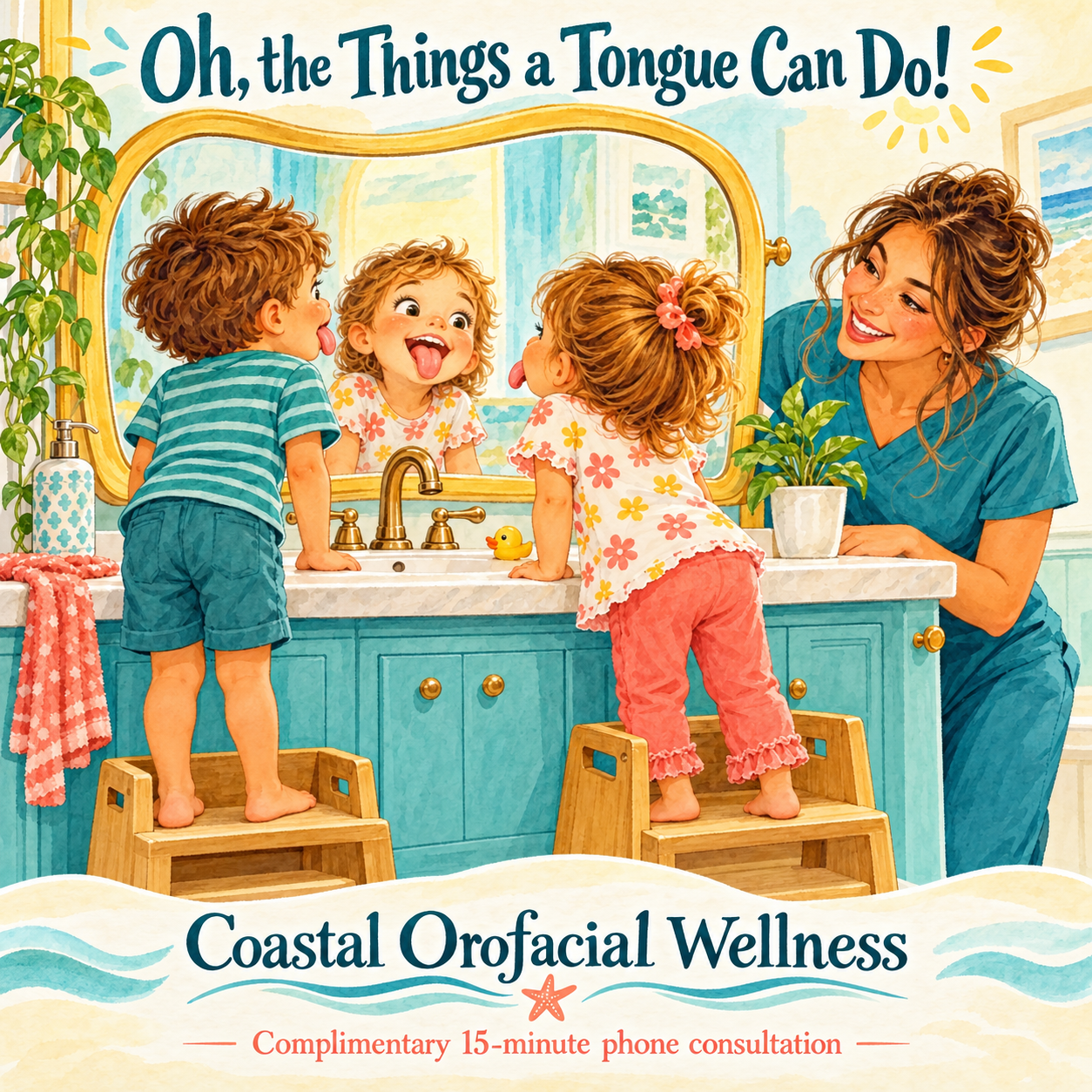
Mirror, Mirror on the Wall… What’s That Tongue Doing After All?
Little mouths have big jobs! Enjoy a playful look at your child’s tongue and oral habits, discover what orofacial myofunctional therapy involves, and learn when an evaluation may help. Serving families in Palm Beach and Martin Counties.
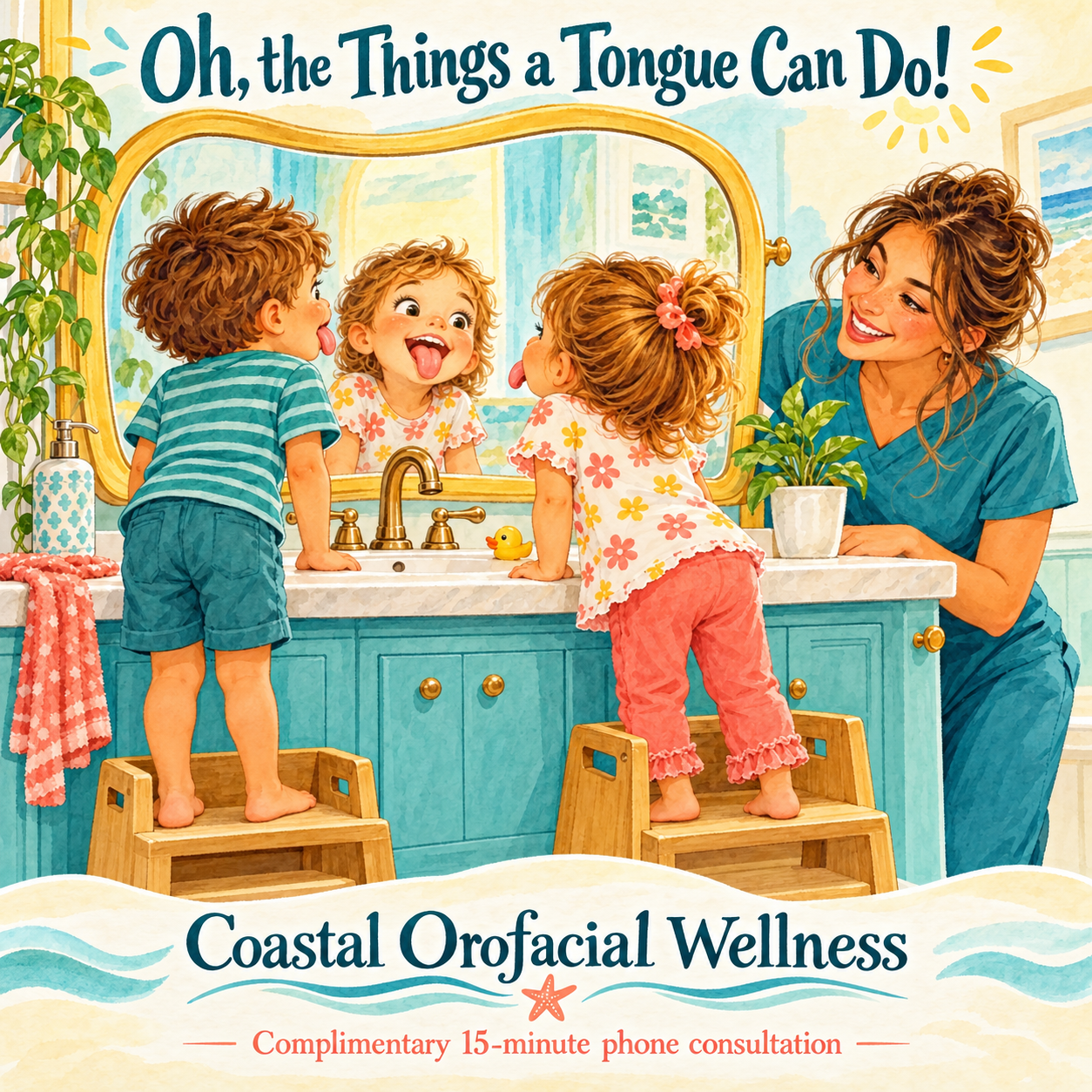
Little mouths have big jobs! Discover how orofacial myofunctional therapy supports healthy oral habits with Coastal Orofacial Wellness.
👄 Oh, the Things a Tongue Can Do!
A tongue can wiggle. A tongue can flop.
It can sneak out in pictures and never quite stop! 😛
But where does it rest when the wiggles are through?
And what does it do when your child starts to chew?
Does your little one’s mouth often hang open wide?
Does a thumb find its way for a cozy inside?
Does mealtime involve quite a curious show—
With tongue acrobatics wherever you go?
There’s more to that tongue than a raspberry sound—
It has everyday jobs all year round!
Orofacial myofunctional therapy focuses on how the tongue, lips, and other oral muscles work together for resting posture, breathing, chewing, and swallowing.
No scolding of thumbs. No “Your tongue is all wrong!”
We explore what’s happening and help skills grow strong. 💙
Wondering whether an evaluation would help your child? Let’s talk! We can discuss your concerns and whether therapy or another professional’s assessment is the right next step.
🌊 Coastal Orofacial Wellness
📞 772-485-0669
🌐 coastalorofacialwellness.com
💬 Schedule a complimentary 15-minute phone consultation.
Because little mouths have BIG jobs to do—
And you don’t have to figure it out without a clue! 😊

My Child Can Read the Words—But Do They Understand the Story?
Reading the words is only part of understanding a story. Discover how a Halloween dragon can help explain the connection between comprehension, descriptive language, and expressing ideas.

What a Halloween dragon can teach us about reading comprehension and expressing ideas.
Your child reads a page aloud. The words sound right. The sentences flow. Then you ask, “What happened in the story?”
“I don’t know.”
You might wonder: Were they paying attention? Should we read it again? How can they read it so well without understanding it?
Reading the words and understanding their meaning are connected skills, but they are not the same. A child may recognize words accurately while still having difficulty making sense of the message. Speech-language pathologists look at both spoken and written language because understanding and expressing language are closely connected to literacy.
Sometimes, an everyday conversation offers a helpful way to understand that connection.
“I Want to Be a Dragon!”
Imagine asking your child what they want to be for Halloween.
“A dragon!”
Wonderful. You’re ready to find the costume—or dust off your craft supplies.
“What should your dragon look like?”
“A dragon.”
“Do you want wings? What color? Does it have spikes?”
“I don’t know. Just a dragon!”
You may be imagining a friendly green dragon with little wings. Your child may be thinking of an enormous red dragon with silver horns and a tail that practically needs its own parking space.
Or your child may not have worked out those details yet.
Naming an idea is different from developing it and describing it clearly enough for someone else to understand.
To explain the costume, your child needs to think about its features, choose descriptive words, organize those details, and consider what you need to know.
That is a lot of language hiding inside one Halloween question.
What Does This Have to Do With Reading?
The dragon example offers a useful parallel.
When describing a costume, a child moves from an idea toward words:
“What am I imagining, and how can I explain it to you?”
When reading, a child moves from words toward meaning:
“What is the author describing, and how do these details fit together?”
Consider this sentence:
The little dragon tucked its torn wings beneath a wet blanket and shivered outside the castle gate.
A child might read every word correctly. Understanding the scene requires more: connecting the details, knowing what the words mean, and thinking about what the sentence suggests.
Is the dragon comfortable? Probably not.
What tells us that? The wet blanket and shivering.
Might it need help? What in the sentence supports that idea?
These connections help turn a string of words into a meaningful scene.
Imagining, Understanding, and Putting Ideas Into Words
For some children, imagining a scene helps them connect and remember details. Describing that scene can help them organize their thinking and show what they understand.
You might think of it as building meaning and then putting that meaning into words.
However, difficulty describing a dragon does not automatically mean a child has difficulty forming mental images or understanding reading. They may need help with vocabulary, finding words, organizing ideas—or simply deciding what kind of dragon they want.
Children also differ in how vividly they picture things in their minds. A vivid mental picture is not a requirement for understanding a story. Pictures, discussion, gestures, and other supports can also help children build meaning.
The important question is whether your child can understand ideas, connect details, and communicate their message—not whether they describe their imagination in one particular way.
Try It at Home: Design the Dragon Together
Instead of asking a long series of questions, start with one manageable detail.
Offer a choice.
“Are you imagining a tiny dragon that sits on your shoulder or a huge dragon taller than our house?”
Add a feature.
“What color is it? Does it have smooth skin, scales, or fur?”
Give the detail a purpose.
“Does it use its wings to fly, or are they too small?”
Model a description.
“My dragon is purple with golden wings. It looks fierce, but it is afraid of butterflies.”
Put the details together.
“Let’s tell someone else about your dragon so he can imagine it, too.”
Drawing the dragon or choosing pictures together can take some pressure off speaking. You can help supply a word when needed: “Those sharp things along its back could be called spikes.”
Keep it playful. This is a conversation, not a test.
Bring the Same Approach to Books
After a short passage, try one or two prompts:
“What is happening in this part?”
“Which words helped you figure that out?”
“How do you think the character feels? What gives you that idea?”
“Can you draw it, act it out, or explain it to me?”
If your child is unsure, model your own thinking:
“I think the dragon feels cold because the author says it is shivering. The blanket is wet, so it probably isn’t helping much.”
Then give your child time to respond. The goal is to help them connect meaning, rather than remember isolated details just to answer questions.
When Is It Worth Asking for Help?
One brief answer about a costume is not a reason to worry. Look for patterns across everyday conversations, listening, reading, and schoolwork.
A child may benefit from a closer look if they frequently struggle to explain ideas, retell events in order, understand what they hear or read, or give enough information for someone else to follow. Spoken-language difficulties and reading difficulties can occur together, which is why looking across these activities matters. ASHA: Written Language Disorders
Talk with your child’s teacher about what they notice. A speech-language evaluation can help clarify whether language skills are contributing and what support may be useful.
Helping Children Understand—and Be Understood
At Coastal Orofacial Wellness, I help children strengthen language, communication, and reading skills through individualized support. That may include building vocabulary, organizing descriptions, retelling stories, and connecting details to meaning.
In-home services are available in Martin and Palm Beach counties, with virtual therapy available for Florida families.
If your child can read the words but struggles to explain the meaning—or has wonderful ideas that are difficult to put into words—a complimentary 15-minute phone consultation is a place to start.
Visit coastalorofacialwellness.com or call 772-485-0669.
Breathe better, speak clearly, read confidently, and thrive.
Step Up For Students and Support for Your Child at Coastal Orofacial Wellness
Learn how eligible families can use Step Up For Students scholarship funds for speech therapy, language services, and reading support at Coastal Orofacial Wellness in Martin and Palm Beach Counties.
You notice the little things. Your child has wonderful ideas but struggles to put them into words or sounds. Reading homework ends in frustration. Other people have trouble understanding what your child says, and you find yourself translating.
Finding help is one decision. Figuring out how to pay for it is another.
For eligible Florida families, a scholarship through Step Up For Students may help make individualized services more accessible. At Coastal Orofacial Wellness PLLC, I work with families to connect their child's needs with appropriate speech, language, reading, and oral function support.
What is Step Up For Students
Step Up For Students is a nonprofit scholarship funding organization that administers several Florida scholarship programs. For families exploring therapy, one particularly relevant option is the Family Empowerment Scholarship for Students with Unique Abilities, often called FES-UA.
This scholarship provides an education savings account for approved expenses, including eligible therapies and educational services. It can support a combination of resources rather than being used only for private school tuition.
Each scholarship has its own rules. Approval for one program does not mean every therapy or tutoring service is covered.
Why families consider applying
The practical benefit is having more options when planning your child's support. Eligible funding may reduce the amount your family pays out of pocket for approved services and help you choose a qualified provider who fits your child's needs.
That flexibility can make room for focused work on everyday challenges: being understood, explaining an idea, following directions, or approaching a reading assignment with greater independence.
A scholarship itself does not guarantee progress. Meaningful support starts with understanding your child, setting appropriate goals, and adjusting instruction or therapy as needs change.
Personalized support at Coastal Orofacial Wellness
Coastal Orofacial Wellness PLLC welcomes families using Step Up For Students scholarship funds for eligible, approved services.
I'm Marianne Salem, M.S., CCC-SLP, a speech-language pathologist with 26 years of experience, Orton-Gillingham training and certification in orofacial myofunctional therapy.
My practice serves children and families in Martin and Palm Beach Counties, including Hobe Sound, Jupiter, Tequesta, Stuart, Palm Beach Gardens, and North Palm Beach. In-person and virtual options are available, with in-home services offered according to location and availability.
Speech and articulation
For a child who is difficult to understand, therapy can target speech sounds and help carry those skills into conversation. Goals are selected according to the child's evaluation and functional needs.
Language and communication
Support may address understanding spoken information, developing sentences, building vocabulary, organizing thoughts, and telling a clear story. The goal is communication that helps your child participate at home, in learning, and socializing with family and peers.
Reading support using an Orton-Gillingham approach
Individualized instruction can address sound-letter relationships, decoding, spelling, reading fluency, and comprehension. Lessons are paced to the child's skills and learning needs, with opportunities for guided practice.
Orofacial myofunctional and oral function services
When clinically appropriate, services may address oral resting posture, tongue and lip function, swallowing patterns, and oral habits. Collaboration with dental or medical professionals may be recommended, including when there are concerns about nasal breathing or tongue restriction.
These are services offered by the practice, not a list of automatically covered scholarship expenses. Reading instruction, myofunctional therapy, feeding or swallowing services, and other specialized services require confirmation under your child's particular scholarship.
Could your child qualify
FES-UA serves eligible Florida students with qualifying disabilities or conditions. Speech impairment, language impairment, autism, and specific learning disabilities are among the listed categories. A concern alone does not establish eligibility; required documentation and other program criteria must be met.
Visit Step Up For Students for the current eligibility requirements and application instructions and learn how participation could affect your child's educational placement and services.
How to get started
1. Review the scholarship options at stepupforstudents.org and identify the program that fits your child.
2. Follow the application instructions and gather the required documentation.
3. If awarded, accept the scholarship and confirm that funds are available before arranging payment.
4. Contact Coastal Orofacial Wellness to discuss your child's needs and confirm the specific service and payment process.
5. In EMA, use Marketplace and Find Providers to look for Coastal Orofacial Wellness PLLC. Contact me if you need help locating the practice.
Provider participation does not guarantee approval of every expense. Review the current handbook and purchasing guide before committing scholarship funds or paying for services with the expectation of reimbursement.
Start with a conversation
You do not need to have every answer before reaching out. A complimentary 15-minute phone consultation gives us an opportunity to discuss your concerns and whether my services may be a good fit.
Already have a Step Up scholarship? Read my step-by-step guide to using Step Up For Students for Speech/Language therapy. Mention it when you contact me so we can discuss eligible service options and next steps.
Website: coastalorofacialwellness.com
Email: info@coastalorofacialwellness.com
Breathe better, speak clearly, read confidently, and thrive.
Official scholarship resources
Unique Abilities eligibility and program overview
https://www.stepupforstudents.org/scholarships/unique-abilities/
Family handbook and purchasing guide
https://www.stepupforstudents.org/resources/ua/
EMA provider search and payment information
https://www.stepupforstudents.org/scholarships/unique-abilities/spend/
Scholarship information checked October 21, 2026. Requirements and approved expenses may change.
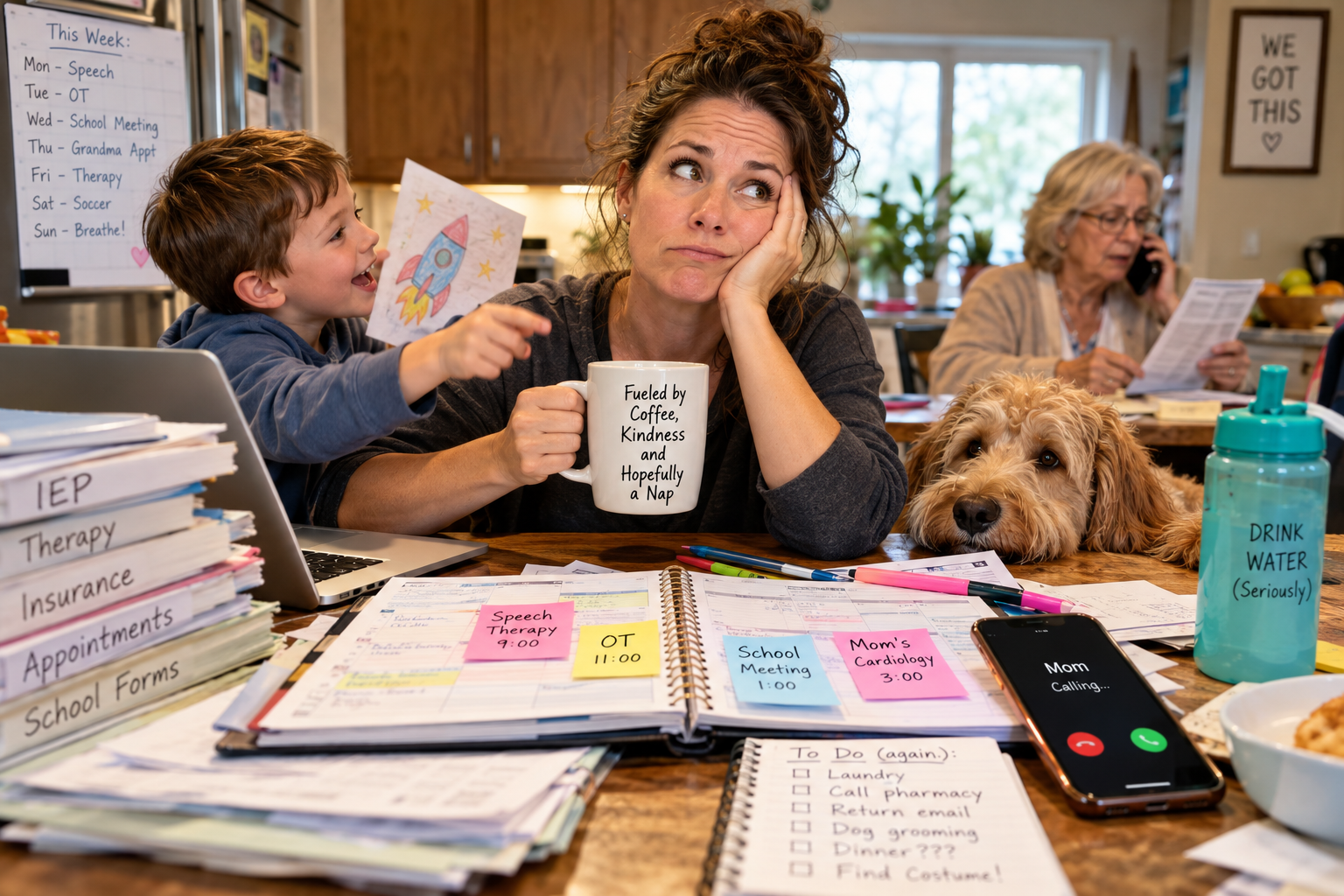
The Sandwich Generation: When Everyone Needs You, and You Just Need a Nap!
Kids need therapy. Aging parents need appointments. Your calendar needs a therapist of its own, and your coffee has been reheated four times! Welcome to the Sandwich Generation! 🥪 Discover how Coastal Orofacial Wellness makes life a little easier with convenient in-home speech and orofacial myofunctional therapy for families using eligible Step Up For Students scholarships. Less driving, less stress, and maybe even time for a hot cup of coffee!
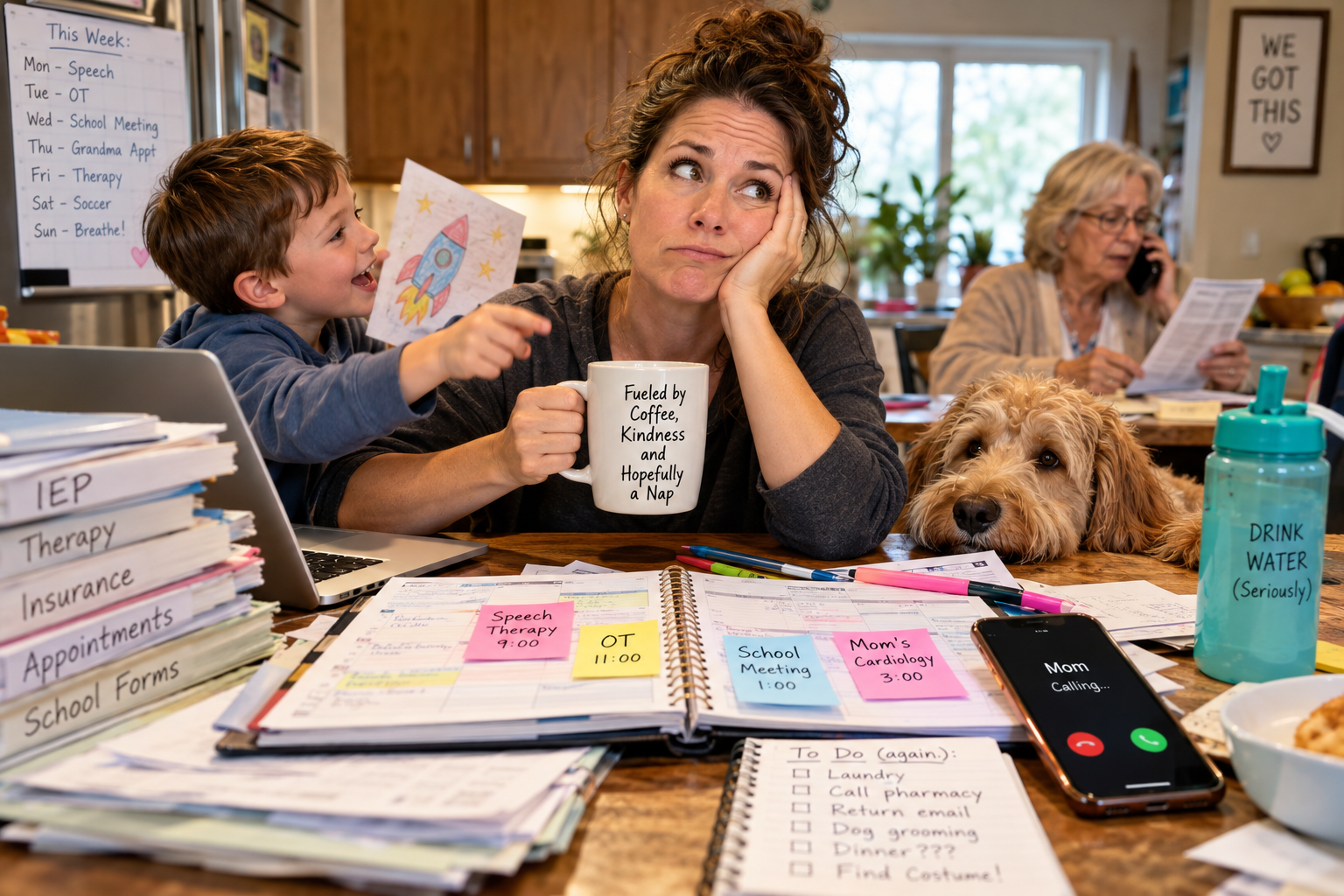
The Sandwich Generation: When everyone needs you, your calendar needs therapy, and your coffee needs reheating…again!
Raising children, caring for aging parents, managing therapy appointments, and trying to remember why you walked into the kitchen.
There was a time when being "sandwiched" sounded delightful. Turkey, Swiss, a little avocado, maybe some spicy mustard.
Then you entered the Sandwich Generation, and suddenly you're the turkey.
On one side, you have your children, who need rides, homework help, emotional support, snacks, and approximately 47 different passwords for their school accounts.
On the other side, you have aging parents who need help with appointments, prescriptions, technology, and occasionally locating the television remote that's been sitting in their lap for 20 minutes.
And somewhere in the middle?
You.
Holding a lukewarm cup of coffee, wearing yesterday's yoga pants, and wondering whether you've brushed your teeth.
Welcome to the club. We don't have jackets. Nobody has time to order them.
When Your Family Calendar Needs Its Own Therapist
For parents raising children with unique abilities, everyday life often includes an entirely different level of scheduling gymnastics.
There's speech therapy on Tuesday, occupational therapy on Wednesday, a school meeting on Thursday, and an evaluation scheduled six months from now with a specialist whose office is apparently located on another planet.
Meanwhile, Grandma has a cardiology appointment, Grandpa needs help with his phone, the dog is overdue for grooming, and someone just informed you that tomorrow is "Dress Like Your Favorite Historical Figure Day" at school.
Wonderful.
Does Amazon Prime deliver Abraham Lincoln costumes overnight?
And let's not forget the paperwork!
IEPs, evaluations, progress reports, insurance forms, scholarship applications, and permission slips.
At this point, you could probably qualify for an honorary degree in administrative management.
Your Child Is More Than Another Appointment
Here's something important beneath all the chaos.
Your child isn't a collection of diagnoses, appointments, or developmental milestones.
Your child is a wonderfully unique individual with strengths, interests, personality, and incredible potential.
Maybe your child communicates differently, struggles with certain speech sounds, finds reading frustrating, has difficulty with oral-motor coordination, or needs extra support with feeding and swallowing.
Whatever the challenge, therapy should fit into your family's life—not require your entire family to revolve around therapy.
Because sometimes the greatest gift a parent can receive isn't another appointment.
It's one less place they have to drive.
Plot Twist: What If the Therapist Came to YOU?
Imagine this.
No rushing through traffic.
No packing three different snacks for a 30-minute appointment.
No sitting in a waiting room wondering whether you remembered to move the laundry into the dryer.
And no dragging an exhausted child across town after an already exhausting school day.
Instead, your child's therapist comes to your home.
Yes, your actual home.
With the toys on the floor, the dog barking, and the laundry pile you've been meaning to fold since approximately two months ago.
Good news: I'm coming to provide therapy, not judge your housekeeping!
At Coastal Orofacial Wellness, I offer individualized, in-home speech-language and orofacial myofunctional therapy services for children and families.
Depending on your child's needs, services may address:
Speech sound production and articulation
Language development and communication
Reading fluency and comprehension
Oral function and orofacial myofunctional concerns
Feeding and swallowing difficulties
Oral habits and tongue function
Therapy in a familiar environment can also create opportunities to practice meaningful skills during everyday activities.
And parents can learn strategies that fit naturally into family routines—without adding another complicated assignment to the refrigerator door.
Wait! There's a Scholarship for That?
Looking for a Step Up For Students therapy provider?
Coastal Orofacial Wellness offers individualized in-home speech-language and orofacial myofunctional therapy throughout Jupiter, Hobe Sound, Stuart, Tequesta, Palm Beach Gardens, and surrounding communities. Eligible Step Up For Students scholarship families may be able to use approved scholarship funds for qualifying services. https://www.stepupforstudents.org/
Now for some news that might make your coffee taste a little better.
Coastal Orofacial Wellness is a Step Up For Students EMA Marketplace provider!
For families participating in eligible Step Up For Students scholarship programs, qualifying therapy services may be available through scholarship funds, subject to program requirements and approval.
That means eligible families may be able to use their scholarship funds toward services designed to support their child's communication, learning, and oral function.
And because I offer in-home therapy, you may be able to eliminate another trip across town.
More convenience.
More individualized attention.
Fewer opportunities to discover that your gas tank is on empty.
That's what I call progress!
You Don't Have to Be a Superhero
Parents are often told, "You're amazing! I don't know how you do it!"
And while that's lovely, sometimes you'd rather someone say:
"I’d love a spa day but, here's dinner. I'll handle the laundry. Go sit down."
The truth is, you shouldn't have to do everything.
Supporting your child's development is important, but so is protecting your family's time, energy, and sanity.
Therapy should be collaborative, practical, encouraging, and occasionally even fun.
Because childhood should include more than appointments.
It should include laughter, exploration, play, and opportunities to grow.
And parenting should occasionally include sitting down long enough to drink a cup of coffee while it's still hot.
Revolutionary concept, I know.
Let's Take One Thing Off Your Plate
I'm the founder of Coastal Orofacial Wellness, a Florida-licensed, ASHA-certified speech-language pathologist with 26 years of experience.
I work with children and families throughout Martin and Palm Beach Counties, including Jupiter, Hobe Sound, Tequesta, Stuart, Palm Beach Gardens, and surrounding communities.
My goal is simple: provide thoughtful, individualized therapy that supports your child's development while respecting the demands of your family's everyday life.
If you're a Step Up For Students family wondering whether in-home speech-language or orofacial myofunctional therapy might benefit your child, I'd love to talk with you.
Schedule a complimentary 15-minute phone consultation.
Let's discuss your concerns, your child's strengths, and how we might make life a little easier.
Because you've already got enough on your plate.
And frankly, that sandwich is getting pretty tall.
Coastal Orofacial Wellness
Breathe better, speak clearly, read confidently, and thrive.
🌐 www.coastalorofacialwellness.com
✉️ info@coastalorofacialwellness.com
Services and scholarship eligibility are subject to individual needs, applicable provider qualifications, scholarship rules, and funding availability.

Kids Don’t Come With a Manual: When Should You Ask an SLP?
From dinosaur explanations to banana negotiations, parenting involves plenty of guessing. Learn when concerns about speech, language, or oral function deserve a closer look.

Mother listening to her son holding a toy dinosaur while her daughter studies a banana at the kitchen table.
Parenting is a lot of guessing.
Are they tired? Hungry? Coming down with something? Or furious because you peeled the banana they specifically asked you to peel?
Then there are the questions that linger: “Should their speech be clearer?” “Why is their mouth always open?” “Is following directions really this hard—or am I just talking to the furniture?”
You do not need to solve the mystery before asking for help. Here are a few things worth discussing with a speech-language pathologist.
You’ve become the family’s official interpreter.
Your child tells Grandma a detailed story. Grandma smiles politely. You translate.
Sometimes this is simply part of learning to talk. Speech sounds develop over time, and expectations depend on age and the languages or dialects a child uses.
But if people frequently struggle to understand your child, your child gets frustrated repeating themselves, or they avoid talking because it feels difficult, an evaluation can help.
An ongoing lisp or speech pattern that concerns you is also worth discussing. The goal is to understand whether support would help your child communicate more comfortably.
“Tell me about your day” requires a detective
You’ve become the family’s official detective.
You ask what happened at school.
“Stuff.”
“What kind of stuff?”
“School stuff.”
A brief report from a tired child is hardly unusual. You may get the entire story at bedtime, when you are already halfway out the door and ready for your own bedtime.
What deserves a closer look is a consistent difficulty finding words, explaining ideas, answering questions, sequencing events, or following age-appropriate directions—even when your child is rested and paying attention.
Speech and language are different skills. A child may pronounce words clearly but have trouble understanding or organizing them. If those struggles affect everyday life or learning, consider a language evaluation.
Their mouth is open—and they aren’t even asking for a snack
You’ve become the family’s official mouth guard.
Children have plenty of reasons to open their mouths. Another snack request. An important dinosaur announcement. A protest about the wrong socks.
But frequently resting with lips apart, or regularly holding the tongue between the teeth, is worth mentioning to a professional trained in oral function.
Persistent thumb or finger sucking beyond the toddler years may also deserve a conversation, especially if your dentist has noticed bite changes.
These observations do not automatically mean your child needs myofunctional therapy. An evaluation helps determine what is happening and whether support or another referral is appropriate.
You notice regular mouth breathing or snoring
You’ve become the family’s official sleep fairy.
A stuffy nose during a cold is one thing. Ongoing mouth breathing or habitual snoring is a reason to check with your child’s pediatrician.
Allergies, nasal blockage, or enlarged tonsils and adenoids may contribute. A medical assessment may be needed before oral function therapy is considered.
An SLP can be part of a coordinated care team. Therapy enhances a collaborative approach; it does not replace medical evaluation of breathing or sleep concerns, and mouth taping is not a home solution.
Mealtimes raise questions beyond “Why won’t you eat the green one?”
You’ve become the family’s official chef and maitre D.
Children can have remarkably specific food rules. Yesterday’s favorite pasta may become unacceptable today because it is “too pasta-y.”
However, difficulty chewing, food staying in the cheeks, frequent coughing or choking during meals, or unusually long meals deserve professional guidance. “Choking” is not always indicated with coughing and/or a reddened face. Silent aspiration signs and symptoms include watery eyes, a change in breathing pattern and/or a wet gurgly voice after a swallow.
Discuss these concerns with your pediatrician and an SLP with feeding and swallowing expertise. Poor growth or concerns about hydration also need medical attention. Active choking or difficulty breathing requires emergency help.
So, when should you reach out?
When a concern keeps coming up, affects daily life, or leaves you wondering whether your child needs support, ask.
Age matters. A speech pattern expected in a younger child may need attention later. Developmental milestones can guide the conversation, but a checklist cannot diagnose your child. A loss of previously acquired skills should be discussed promptly with your pediatrician.
An evaluation does not automatically mean weekly therapy. It may lead to reassurance, monitoring, practical strategies, treatment, or a referral.
You already handle the missing shoes, permission slips, and banana negotiations. You do not have to figure this part out alone.
Let’s talk
At Coastal Orofacial Wellness, we help families understand concerns about speech, language, and oral function and identify appropriate next steps.
Book a complimentary 15-minute phone consultation to share what you are noticing and discuss whether an evaluation may help. It is an initial conversation, not a diagnostic assessment.
Visit coastalorofacialwellness.com or email info@coastalorofacialwellness.com.
Resources for Parents. ASHA sources:
Developmental Milestones: Birth to 5 Years — age-related communication and feeding skills.
Early Identification of Speech, Language, Swallowing, and Hearing Disorders — signs that warrant professional guidance.
Orofacial Myofunctional Disorders — oral posture, tongue patterns, mouth breathing, and coordinated care.
Spoken Language Disorders — difficulties understanding and expressing language.

Picky Eating or a Feeding Difficulty? Signs Parents Should Know
When does picky eating call for a closer look? Learn which mealtime signs may point to a feeding difficulty and when an evaluation could help.

Parent supporting a child as she explores food at the dinner table,
Many children go through phases of refusing certain foods. But when eating is consistently stressful or a child has trouble managing food safely, it may be time to look more closely at what is happening.
Signs to pay attention to include:
Frequent coughing or choking during meals
Difficulty chewing or moving food around the mouth
Holding food in the mouth instead of swallowing
Meals that take an unusually long time
A very limited range of foods that continues to shrink
Distress that regularly makes family meals difficult
These signs do not automatically mean a child needs therapy. A feeding evaluation can help identify whether oral skills, swallowing, sensory responses, or other factors are contributing. The right support depends on the individual child.
At Coastal Orofacial Wellness, I help families better understand their child’s feeding concerns and determine appropriate next steps. If mealtimes have become stressful, schedule a complimentary 15-minute consultation to discuss whether an evaluation may be helpful.

Why Is My Child Still Struggling to Read? 7 Signs They May Need a Different Approach
Is your child struggling with reading despite extra practice? Learn seven signs that may indicate your child could benefit from a structured, Orton-Gillingham based approach to reading instruction.
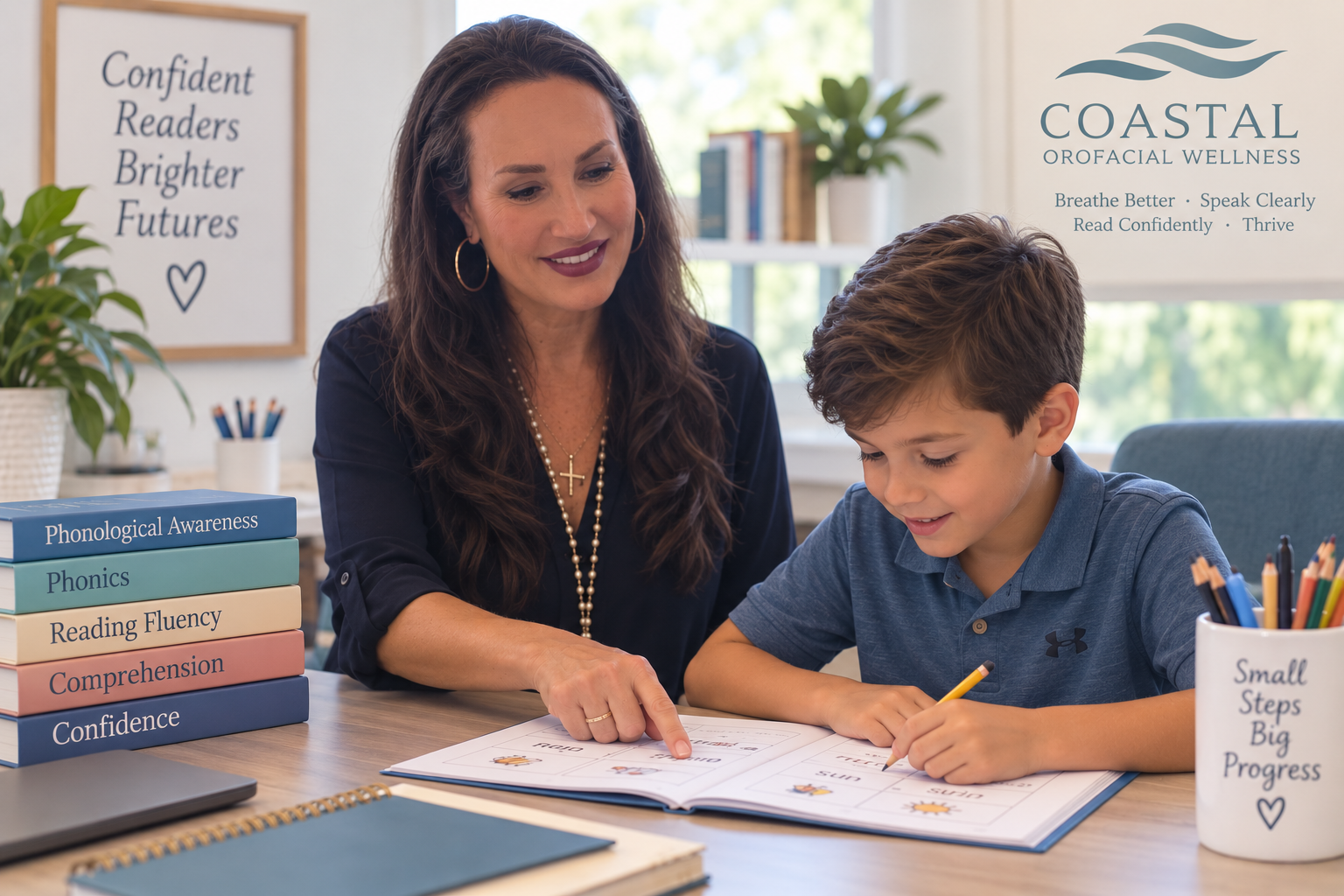
Is your child bright, curious, and capable—but reading still seems much harder than it should be?
Many children struggle with reading despite receiving extra practice at home or school. They may guess at words, have difficulty sounding out unfamiliar words, read slowly, or understand a story much better when someone reads it aloud to them.
These difficulties can sometimes indicate that a child needs a more structured approach to learning how sounds and letters work together. Orton-Gillingham is a structured, explicit, multisensory approach to reading instruction that can be especially helpful for children with dyslexia or persistent reading difficulties.
7 Signs Your Child May Benefit From a Structured Reading Approach
1. They guess at words instead of sounding them out.
Your child may rely on the first letter, pictures, or context rather than decoding the entire word.
2. Sounding out unfamiliar words is difficult.
Even after learning letter sounds, blending those sounds together may remain challenging.
3. Reading is slow, choppy, or takes a lot of effort.
When so much energy goes into figuring out individual words, reading may not become smooth and automatic.
4. Spelling is inconsistent.
Your child may spell the same word differently from one day—or even one sentence—to the next.
5. They understand much more when someone reads to them.
This can be an important clue. A child may have strong language and comprehension skills but struggle with the mechanics of reading the words independently.
6. They avoid reading or become frustrated.
Reading may lead to complaints, avoidance, guessing, or statements such as, “I’m just not good at reading.”
7. Extra practice hasn’t solved the problem.
Sometimes children don’t need more practice—they need reading instruction presented in a different, more systematic way.
What Is the Orton-Gillingham Approach?
Orton-Gillingham is a structured, sequential, and multisensory approach to teaching reading. Rather than asking a child to simply memorize words, it explicitly teaches how sounds, letters, syllables, and spelling patterns work together.
Lessons are individualized and build upon previously mastered skills. Children are given opportunities to see, hear, say, write, and work with sounds and words in multiple ways. This can help strengthen decoding, spelling, reading fluency, and ultimately reading comprehension.
Why My Background as a Speech-Language Pathologist Matters
Reading and spoken language are closely connected. As a speech-language pathologist with Orton-Gillingham training, I can look beyond the words on the page and consider the language skills that support successful reading—including phonological awareness, speech-sound skills, vocabulary, language comprehension, and reading fluency.
At Coastal Orofacial Wellness, reading support is individualized to the child rather than using a one-size-fits-all approach.
Reading Support in Palm Beach and Martin Counties
If your child is struggling with reading, you don’t have to wait until they are significantly behind to seek additional support. Identifying the specific skills that are causing difficulty can help determine what type of instruction may be most beneficial.
At Coastal Orofacial Wellness, I provide individualized reading support for children throughout Palm Beach and Martin Counties, including Jupiter, Tequesta, Hobe Sound, and surrounding communities.
Is your child working harder at reading but still not making the progress you expected?
Contact Coastal Orofacial Wellness to discuss your child’s reading needs and learn whether an Orton-Gillingham-based approach may be appropriate.

5 Signs Your Child May Benefit From Orofacial Myofunctional Therapy
Is your child mouth breathing, tongue thrusting when chewing and/or swallowing, or struggling with certain speech sounds? Learn five signs that may indicate an orofacial myofunctional concern and when an evaluation may be helpful.

Many parents have never heard of orofacial myofunctional therapy until a dentist, orthodontist, speech-language pathologist, or other provider mentions it. Yet the way the tongue, lips, jaw, and facial muscles function can affect everyday activities such as speaking, chewing, swallowing, and breathing.
Here are five signs that may be worth discussing with a qualified professional:
1. Your child frequently breathes through their mouth. Occasional mouth breathing with a cold is normal, but persistent mouth breathing may be worth evaluating.
2. Their mouth tends to stay open at rest. Ideally, the lips can rest comfortably together and the tongue has an appropriate resting position.
3. You notice unusual swallowing patterns. Some children push their tongue forward or against their teeth when swallowing.
4. Certain speech sounds remain difficult. Tongue placement and oral muscle patterns can sometimes contribute to persistent articulation difficulties.
5. Someone has mentioned a possible tongue-tie or oral-function concern. A tongue-tie should not be evaluated simply by how it looks. What matters is how the tongue functions during speaking, eating, swallowing, and other oral activities.
What should parents do next?
Seeing one of these signs doesn’t necessarily mean your child needs therapy. A comprehensive evaluation can help determine what is happening and whether treatment or referral to another professional would be appropriate.
At Coastal Orofacial Wellness, we provide individualized speech-language pathology and orofacial myofunctional services for children and adults throughout Palm Beach and Martin counties.
Have questions about your child’s speech, breathing, swallowing, or oral function? Contact Coastal Orofacial Wellness to schedule an evaluation.

What is Orofacial Myofunctional Therapy and Could It Help You or Your Child?
Have you ever wondered why a child continues to breathe through their mouth, struggles to produce certain sounds clearly, or has difficulty keeping their tongue in a comfortable resting position? Perhaps you are an adult experiencing similar concerns, including tension, swallowing difficulties, or oral habits that have been hard to change.
These concerns may involve the way the muscles of the mouth, tongue, lips, and face work together. Orofacial myofunctional therapy can help identify these patterns and build healthier, more efficient oral function.
What is orofacial myofunctional therapy?
Orofacial myofunctional therapy, often called OMT, is an individualized therapy approach focused on the muscles and movement patterns of the face and mouth.
Treatment may address:
Tongue resting posture
Lip closure and oral rest posture
Nasal-breathing habits when medically appropriate
Chewing and swallowing patterns
Tongue thrust
Oral habits such as prolonged thumb sucking or pacifier use
Speech sound concerns connected to oral motor patterns
Functional support before or after a tongue tie procedure
The goal is not simply to complete exercises. It is to help new patterns become comfortable and useful during everyday activities such as speaking, eating, swallowing, resting, and sleeping.
Signs that an evaluation may be helpful
Every person is different, and one sign alone does not necessarily indicate a disorder. However, an evaluation may be worth considering when you notice:
An open mouth resting posture
Frequent mouth breathing
Difficulty keeping the lips comfortably closed at rest
A tongue that rests against or between the teeth
Tongue thrust during swallowing
Persistent difficulty producing certain speech sounds
Messy, slow, or uncomfortable eating
Difficulty moving food efficiently in the mouth
Dental or orthodontic concerns that repeatedly return
A history of prolonged thumb sucking or pacifier use
Concerns about a possible tongue tie
Snoring, restless sleep, or other breathing concerns that require medical evaluation
Because breathing, dental development, speech, and swallowing can be interconnected, collaboration is often important. Depending on the individual’s needs, care may include communication with a dentist, orthodontist, pediatrician, ENT, oral surgeon, lactation professional, or another healthcare provider.
What happens during an evaluation?
An evaluation begins with listening. We discuss your concerns, relevant medical and developmental history, and the changes you hope to see.
The assessment may examine breathing patterns, oral resting posture, tongue and lip movement, speech production, chewing, swallowing, and oral habits. For children, activities are presented in a comfortable, age appropriate approach.
Afterward, the findings are explained in clear language and recommend appropriate next steps. Therapy is never one-size-fits-all. Recommendations are based on the person’s functional needs, readiness, and overall care plan.
What does therapy look like?
Sessions are supportive, practical, and designed to build awareness without creating anxiety. Clients learn specific strategies and gradually practice them in increasingly natural situation.
Children might use mirrors, visual cues, games, or simple practice activities. Adults receive exercises and strategies that fit realistically into their daily routines. Short, consistent, and necessary, home practice is often more helpful than occasional lengthy practice.
Progress takes time because we are working to change patterns the body may have used for many years. The process should feel collaborative, achievable, and connected to meaningful everyday goals.
Support for children and adults.
Orofacial myofunctional concerns are not limited to one age group. Children may benefit when oral patterns affect speech, eating, dental development, or oral habits. Teenagers and adults may seek support alongside orthodontic treatment, after a tongue tie procedure, or when addressing long-standing swallowing and resting posture patterns.
The best time to begin depends on the person’s needs, development, motivation, and any underlying medical or structural concerns.
Take the next step
If something about your child’s speech, breathing habits, oral posture, or swallowing does not seem quite right, or if you have similar concerns yourself, you do not have to determine the cause alone.
At Coastal Orofacial Wellness, I provide thoughtful, individualized care for children and adults throughout Palm Beach and Martin counties. When appropriate, I also collaborate with other professionals to help create a coordinated plan of care.
Breath better. Speak clearly. Read confidently. Thrive.
To learn whether an evaluation may be appropriate, select Contact Marianne. Medical and dental professionals may use the Refer a Patient button to begin a referral.
Educational note: This article provides general information and is not a diagnosis or a substitute for individualized medical, dental, or therapeutic care.
Have you ever wondered why a child continues to breathe through their mouth, struggles to produce certain sounds clearly, or has difficulty keeping their tongue in a comfortable resting position? Perhaps you are an adult experiencing similar concerns, including tension, swallowing difficulties, or oral habits that have been hard to change.
These concerns may involve the way the muscles of the mouth, tongue, lips, and face work together. Orofacial myofunctional therapy can help identify these patterns and build healthier, more efficient oral function.
What is orofacial myofunctional therapy?
Orofacial myofunctional therapy, often called OMT, is an individualized therapy approach focused on the muscles and movement patterns of the face and mouth.
Treatment may address:
Tongue resting posture
Lip closure and oral rest posture
Nasal-breathing habits when medically appropriate
Chewing and swallowing patterns
Tongue thrust
Oral habits such as prolonged thumb sucking or pacifier use
Speech sound concerns connected to oral motor patterns
Functional support before or after a tongue tie procedure
The goal is not simply to complete exercises. It is to help new patterns become comfortable and useful during everyday activities such as speaking, eating, swallowing, resting, and sleeping.
Signs that an evaluation may be helpful
Every person is different, and one sign alone does not necessarily indicate a disorder. However, an evaluation may be worth considering when you notice:
An open mouth resting posture
Frequent mouth breathing
Difficulty keeping the lips comfortably closed at rest
A tongue that rests against or between the teeth
Tongue thrust during swallowing
Persistent difficulty producing certain speech sounds
Messy, slow, or uncomfortable eating
Difficulty moving food efficiently in the mouth
Dental or orthodontic concerns that repeatedly return
A history of prolonged thumb sucking or pacifier use
Concerns about a possible tongue tie
Snoring, restless sleep, or other breathing concerns that require medical evaluation
Because breathing, dental development, speech, and swallowing can be interconnected, collaboration is often important. Depending on the individual’s needs, care may include communication with a dentist, orthodontist, pediatrician, ENT, oral surgeon, lactation professional, or another healthcare provider.
What happens during an evaluation?
An evaluation begins with listening. We discuss your concerns, relevant medical and developmental history, and the changes you hope to see.
The assessment may examine breathing patterns, oral resting posture, tongue and lip movement, speech production, chewing, swallowing, and oral habits. For children, activities are presented in a comfortable, age appropriate approach.
Afterward, the findings are explained in clear language and recommendations for an appropriate next steps. Therapy is never one-size-fits-all. Recommendations are based on the person’s functional needs, readiness, and overall care plan.
What does therapy look like?
Sessions are supportive, practical, and designed to build awareness without creating anxiety. Clients learn specific strategies and gradually practice them in increasingly natural situation.
Children might use mirrors, visual cues, games, or simple practice activities. Adults receive exercises and strategies that fit realistically into their daily routines. Short, consistent, and necessary, home practice is often more helpful than occasional lengthy practice.
Progress takes time because we are working to change patterns the body may have used for many years. The process should feel collaborative, achievable, and connected to meaningful everyday goals.
Support for children and adults.
Orofacial myofunctional concerns are not limited to one age group. Children may benefit when oral patterns affect speech, eating, dental development, or oral habits. Teenagers and adults may seek support alongside orthodontic treatment, after a tongue tie procedure, or when addressing long-standing swallowing and resting posture patterns.
The best time to begin depends on the person’s needs, development, motivatgion, and any underlying medical or structural concerns.
Take the next step
If something about your child’s speech, breathing habits, oral posture, or swallowing does not seem quite right, or if you have similar concerns yourself, you do not have to determine the cause alone.
At Coastal Orofacial Wellness, I provide thoughtful, individualized care for children and adults throughout Palm Beach and Martin counties. When appropriate, I also collaborate with other professionals to help create a coordinated plan of care.
Breath better. Speak clearly. Read confidently. Thrive.
To learn whether an evaluation may be appropriate, select Contact Coastal Orofacial Wellness. Medical and dental profesionals may use the Refer a Patient button to begin a referral.