

Why Is My Child Still Struggling to Read? 7 Signs They May Need a Different Approach
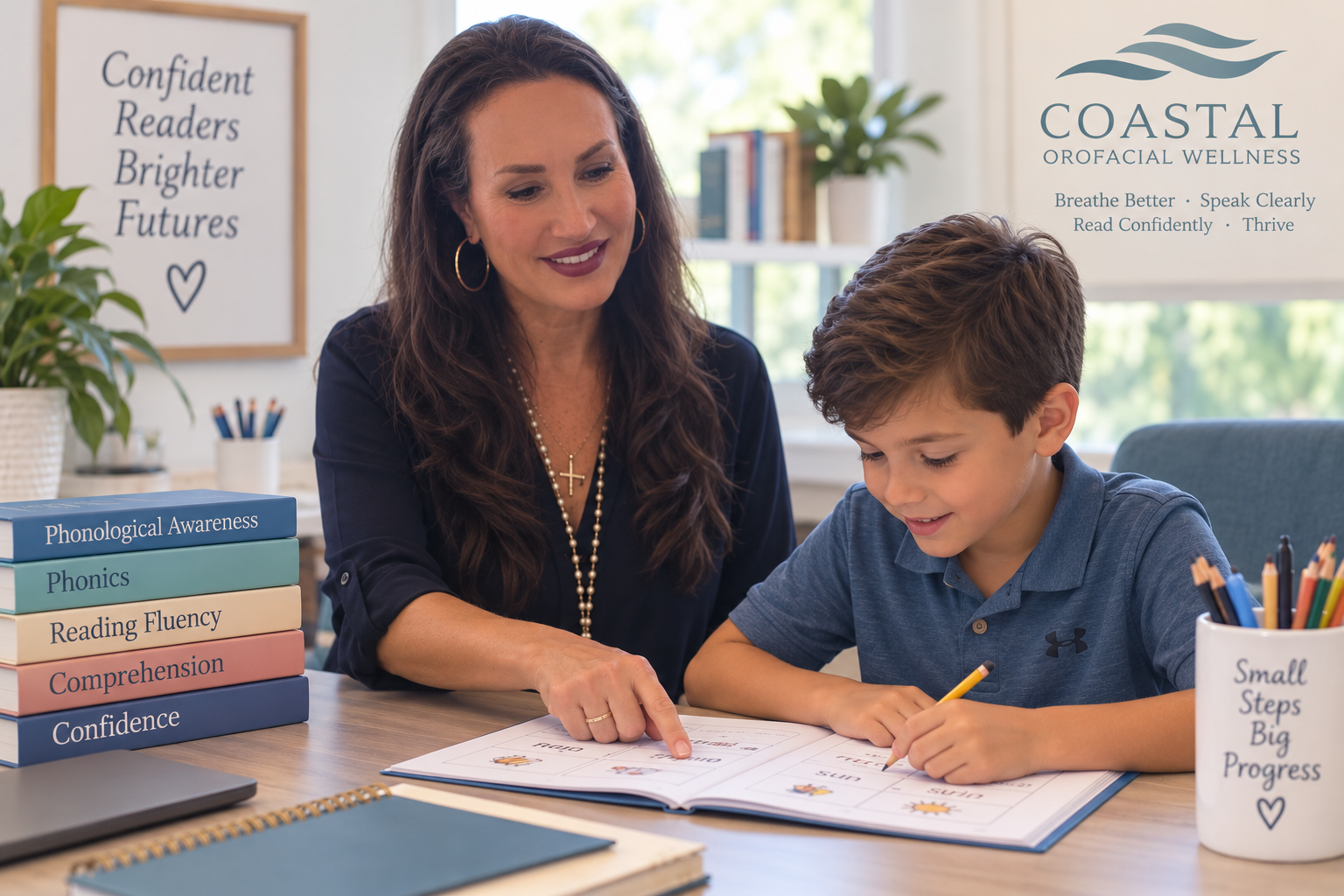
Is your child bright, curious, and capable—but reading still seems much harder than it should be?
Many children struggle with reading despite receiving extra practice at home or school. They may guess at words, have difficulty sounding out unfamiliar words, read slowly, or understand a story much better when someone reads it aloud to them.
These difficulties can sometimes indicate that a child needs a more structured approach to learning how sounds and letters work together. Orton-Gillingham is a structured, explicit, multisensory approach to reading instruction that can be especially helpful for children with dyslexia or persistent reading difficulties.
7 Signs Your Child May Benefit From a Structured Reading Approach
1. They guess at words instead of sounding them out.
Your child may rely on the first letter, pictures, or context rather than decoding the entire word.
2. Sounding out unfamiliar words is difficult.
Even after learning letter sounds, blending those sounds together may remain challenging.
3. Reading is slow, choppy, or takes a lot of effort.
When so much energy goes into figuring out individual words, reading may not become smooth and automatic.
4. Spelling is inconsistent.
Your child may spell the same word differently from one day—or even one sentence—to the next.
5. They understand much more when someone reads to them.
This can be an important clue. A child may have strong language and comprehension skills but struggle with the mechanics of reading the words independently.
6. They avoid reading or become frustrated.
Reading may lead to complaints, avoidance, guessing, or statements such as, “I’m just not good at reading.”
7. Extra practice hasn’t solved the problem.
Sometimes children don’t need more practice—they need reading instruction presented in a different, more systematic way.
What Is the Orton-Gillingham Approach?
Orton-Gillingham is a structured, sequential, and multisensory approach to teaching reading. Rather than asking a child to simply memorize words, it explicitly teaches how sounds, letters, syllables, and spelling patterns work together.
Lessons are individualized and build upon previously mastered skills. Children are given opportunities to see, hear, say, write, and work with sounds and words in multiple ways. This can help strengthen decoding, spelling, reading fluency, and ultimately reading comprehension.
Why My Background as a Speech-Language Pathologist Matters
Reading and spoken language are closely connected. As a speech-language pathologist with Orton-Gillingham training, I can look beyond the words on the page and consider the language skills that support successful reading—including phonological awareness, speech-sound skills, vocabulary, language comprehension, and reading fluency.
At Coastal Orofacial Wellness, reading support is individualized to the child rather than using a one-size-fits-all approach.
Reading Support in Palm Beach and Martin Counties
If your child is struggling with reading, you don’t have to wait until they are significantly behind to seek additional support. Identifying the specific skills that are causing difficulty can help determine what type of instruction may be most beneficial.
At Coastal Orofacial Wellness, I provide individualized reading support for children throughout Palm Beach and Martin Counties, including Jupiter, Tequesta, Hobe Sound, and surrounding communities.
Is your child working harder at reading but still not making the progress you expected?
Contact Coastal Orofacial Wellness to discuss your child’s reading needs and learn whether an Orton-Gillingham-based approach may be appropriate.
